

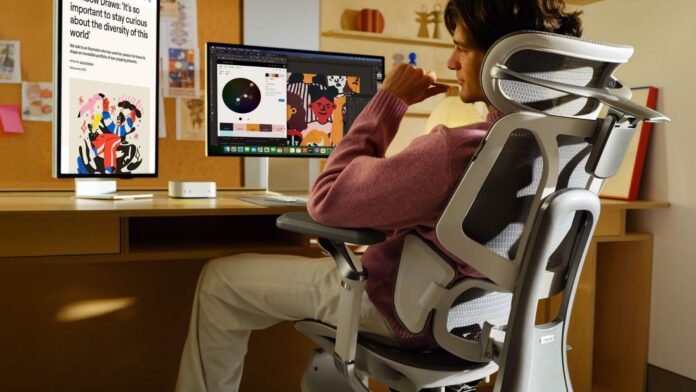

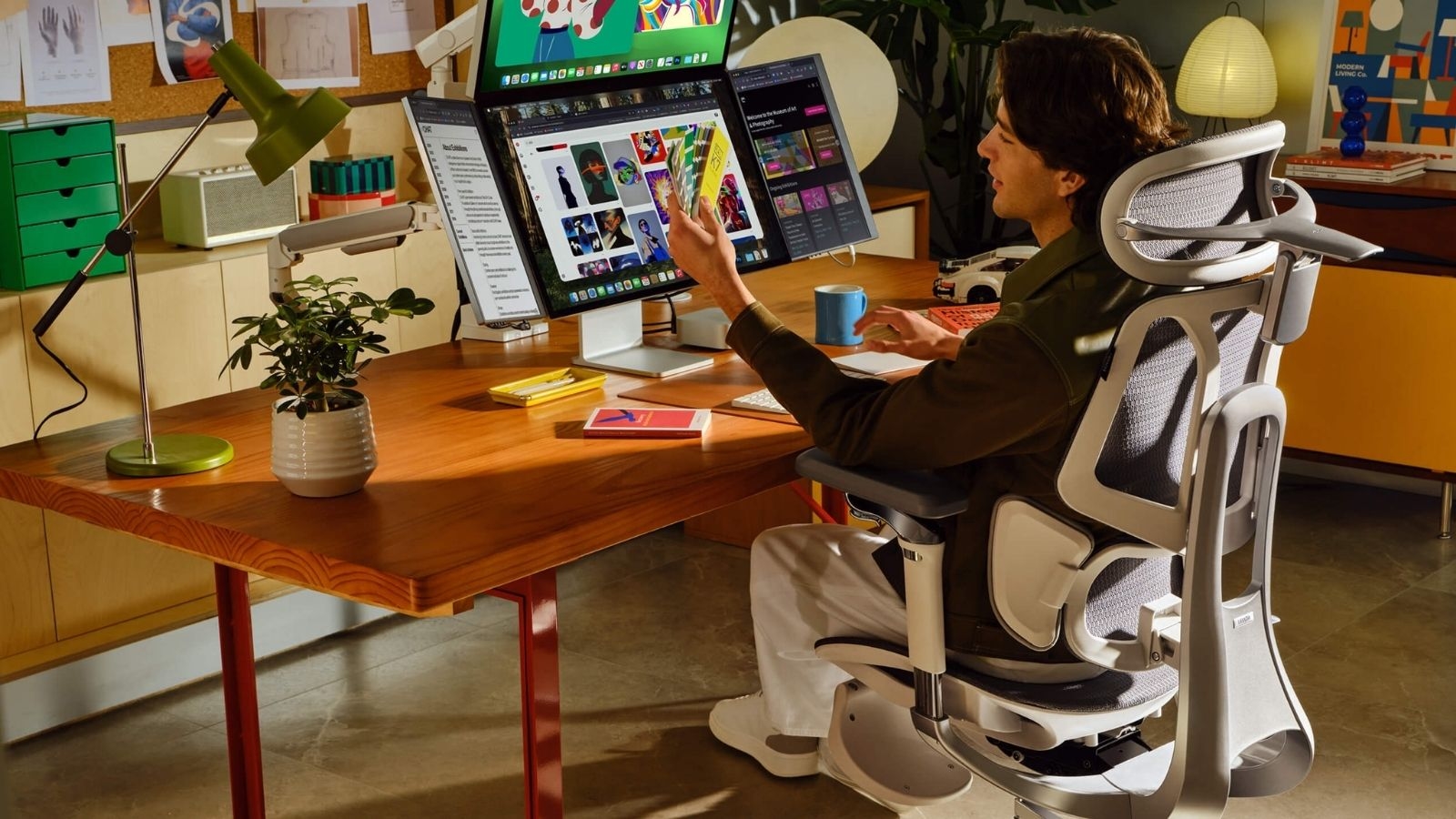
HBADA E3 Pro 2026 Review: The $569 Chair That Competes With Herman Miller
Quick Verdict
The HBADA E3 Pro 2026 is the most adjustable chair under $600 I’ve come across, and at $569 (currently discounted from $709), it undercuts a Herman Miller Aeron by more than $800 while matching it on lumbar adjustability and beating it on headrest and armrest range. The tradeoff is real: build quality has uneven reviews, the white/grey mesh models visibly expose internal hardware, and HBADA doesn’t carry the 12-year warranty that Herman Miller does. For a desk-job guy who sits 6–8 hours a day and isn’t ready to spend $1,400 on a chair, the E3 Pro 2026 is the most credible sub-$600 option in 2026.
Who It’s For
You work from home or have a home office setup you’ve spent real money on, and the chair is the last thing you haven’t upgraded. Your back notices a bad chair after about two hours. You’ve priced Herman Miller and Steelcase and decided you can’t justify $1,400 on something to sit in. You want something with actual lumbar adjustment — not a static foam pad glued to the backrest — and armrests that don’t require you to stop what you’re doing to adjust them.
You’re probably sitting 6 hours minimum on work days. This chair was built around that use case: HBADA specifically positions the E3 Pro 2026 for 6+ hour daily sessions, and the 3-zone lumbar system is designed to track posture movement rather than lock you into one position.
Who It’s Not For
If you’re under 5’1″ or over 6’5″, the fit range excludes you. The chair supports heights between 155cm and 195cm — outside that, seat height and lumbar positioning won’t land correctly.
If aesthetics matter as much as function: the internal mechanisms are visible through the mesh on lighter colorways. One independent reviewer described the white version as looking like “a cyborg skeleton” because every bracket, screw, and plastic fitting shows through the backrest. If your home office doubles as a client-facing space and the chair is in the background of video calls, the black version is the safer pick.
And if long-term durability certainty is the priority, Herman Miller’s 12-year warranty is a fundamentally different value proposition than HBADA’s 5-year structural warranty. That’s a real gap worth naming.
What I Liked
The Lumbar System Is Legitimately Different
Most chairs in this price range give you a lumbar knob that pushes a pad forward or backward. The E3 Pro 2026 runs a 3-zone elastic lumbar system with split wings that rotate 80° inward and outward to wrap around your lower back, a 5° spring-based adaptive support that responds to body weight in real time, and 60mm of independent vertical adjustment on top of the 80mm backrest height range. The wings can be toggled between active tracking mode (follows your movement) or locked for rigid support when you want it stationary.
This is 4th-generation hardware built on feedback from 100,000+ E3 users. The engineering intent — lumbar support that follows your spine rather than fighting it — is sound, and the mechanism to achieve it is more complex than anything I’ve seen at this price point.
720° Armrests Are the Best I’ve Seen Under $700
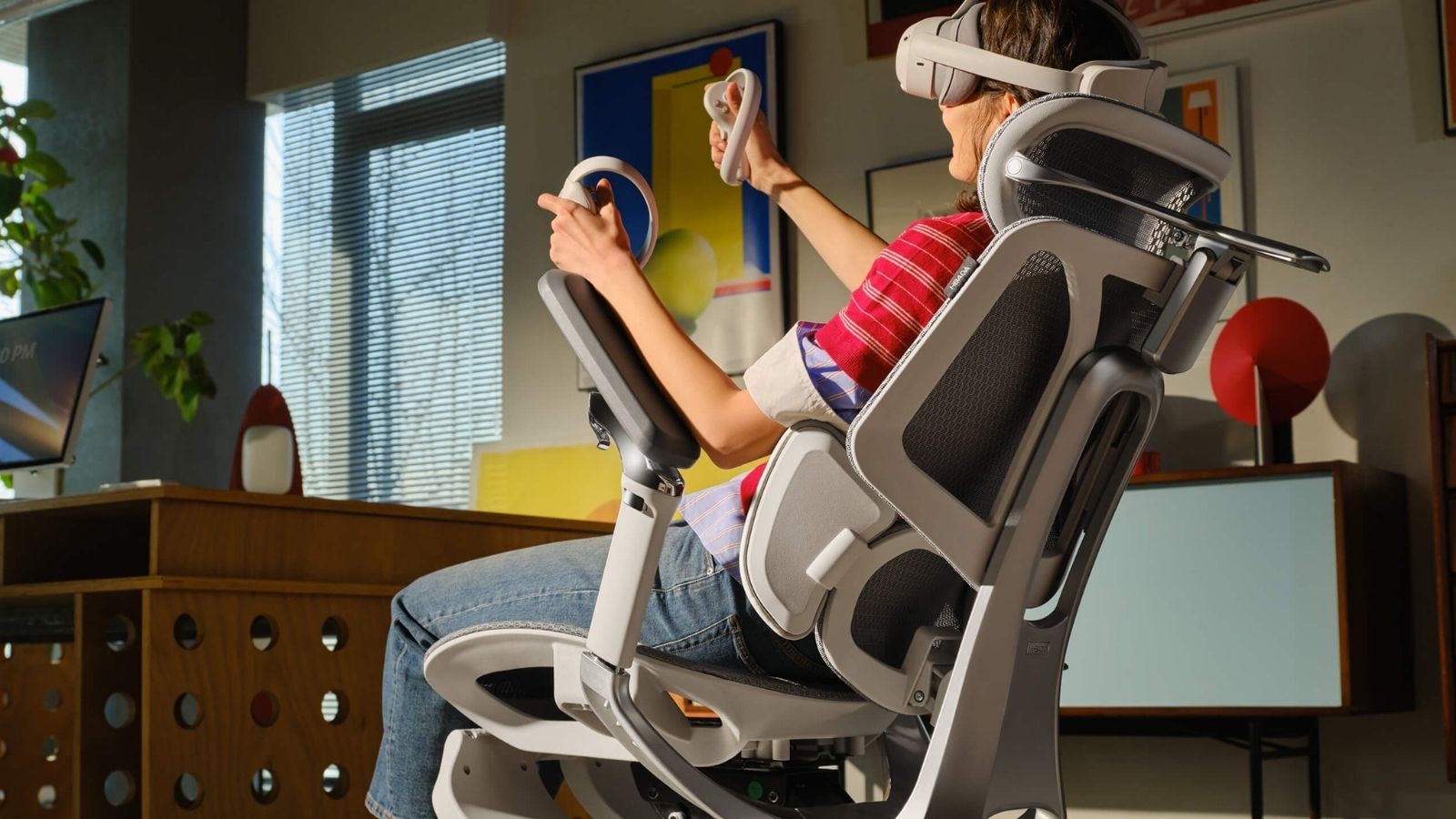
The armrest spec sounds like marketing until you see what it actually means: dual 360° rotation (the armrest pad rotates independently on its own axis, and the arm body swivels 360° as well), plus 70mm of height adjustment, 60mm forward/backward travel, and a 39° flip range that syncs with your recline angle. When you lean back to 130°, the armrests follow you rather than staying fixed at desk height.
For anyone who types a lot, the ability to position armrests precisely — not just up and down, but rotationally — reduces shoulder load meaningfully over a long session. Most chairs in this range give you 4D armrests (height, depth, width, angle). The E3 Pro 2026’s dual-axis rotation structure is genuinely unusual at $569.
The Headrest Actually Adjusts to Your Neck
The 4D dual-axis headrest moves 40mm up and down, 70mm forward and backward, and rotates 70° on two independent axes. The spec that matters in practice is the 70mm depth range — most headrests offer enough vertical adjustment but can’t move far enough forward to actually contact your neck when you’re in a reclined position. At 70mm of forward travel, this one can.
T3 reviewed the previous E3 Pro and noted the headrest makes a clicking noise during rotation, which is a minor annoyance worth knowing about. HBADA describes the 2026 headrest adjustment as “micrometer-level” — the mechanism is more refined than the prior generation, but I’d expect the clicking characteristic to persist.
Recline Is Actually Usable at 140°
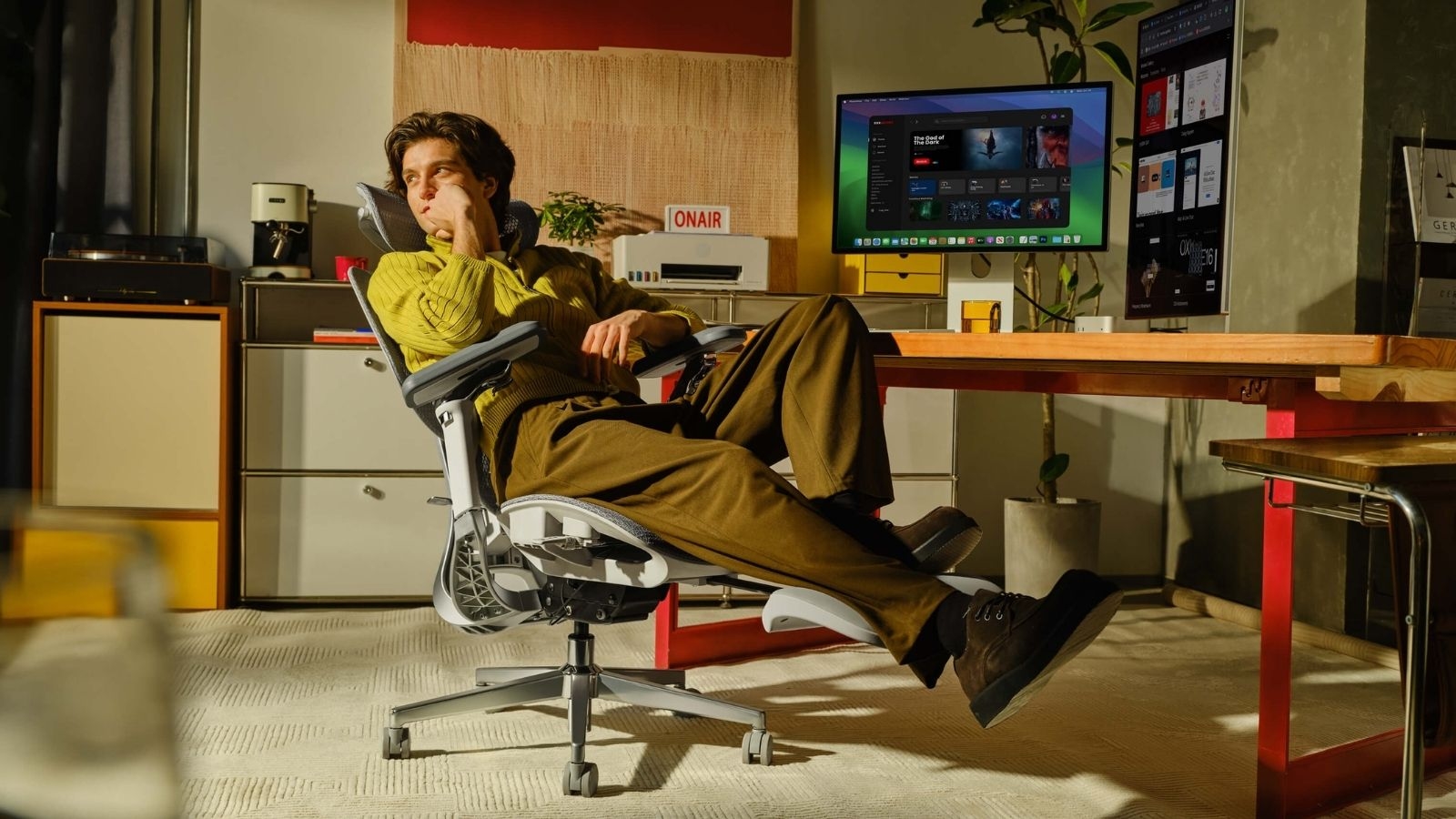
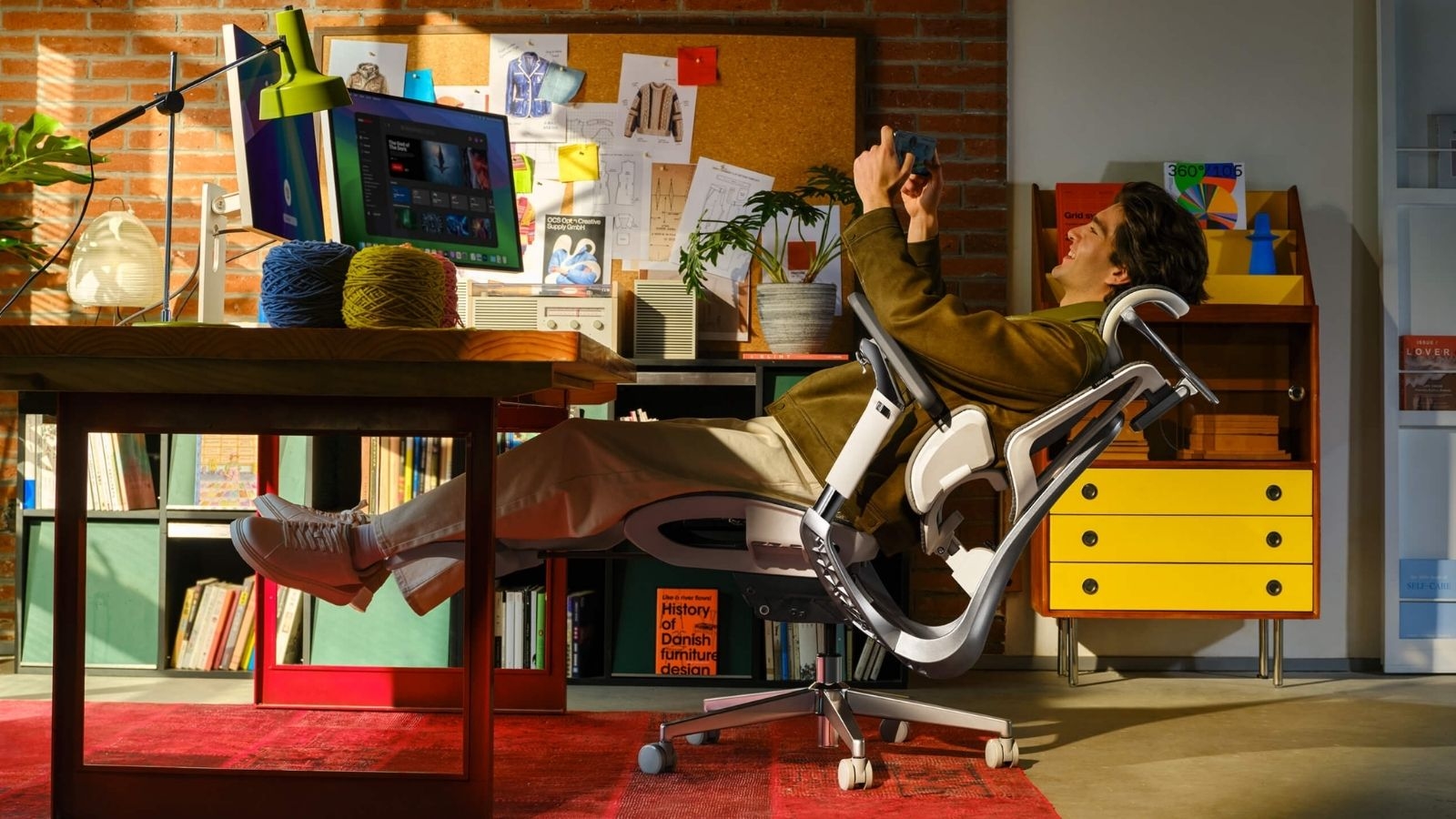
Four tilt lock positions — 100°, 115°, 130°, and 140° — with gravity-sensing tension adjustment that reads your body weight and calibrates resistance automatically. You don’t manually set tilt tension when you sit down. At 140°, the chair is genuinely reclined enough for a rest position, and the integrated footrest (included with most configurations) makes it practical.
At 5’1″–6’5″ fit range with 3.4 inches of seat height adjustment (18.1″ to 20.4″), the seat depth adjusts 2 inches (17.7″ to 19.7″) — enough variation to stop the front edge of the seat from cutting into your thighs if you have shorter legs.
5-Year Structural Warranty Is Upgraded From Prior Generation
The E3 Pro 2026 bumps the structural warranty from 3 years to 5 years on the base, gas lift, and casters. SGS-certified Class 4 gas cylinder, BIFMA-compliant frame, 120,000 fatigue cycles tested across key components. For a $569 chair, that’s a reasonable durability commitment — not Herman Miller’s 12 years, but not a throwaway warranty either.
What I Didn’t Like
Build Quality Has Split Reviews
This is the honest part. T3’s hands-on review noted that armrests felt slightly wobbly during setup. A harsher independent review called the white E3 model one of the worst chairs reviewed — specifically flagging visible internal hardware through the light-colored mesh and describing the overall construction as “a cyborg skeleton.” That reviewer came from a Herman Miller Aeron, which is a $1,400 reference point, so some of the gap in expectation is price-class related. But the visible mechanics on light colorways are a real aesthetic issue, not a subjective one.
The HBADA E3 Pro 2026 is the 4th generation of a chair that has 60,000+ users across generations. It’s not a new product with zero track record. But the build quality perception varies enough across reviews that I’d strongly recommend the black colorway, which hides internal hardware behind opaque mesh, regardless of your aesthetic preference.
Assembly Complexity Matches the Feature Count
This is a chair with 3-zone lumbar wings, dual-axis armrests, a multi-position headrest, a retractable footrest, and a gravity-sensing tilt mechanism. Assembly isn’t plug-and-play. T3 described it as manageable but noted the chair is heavy in places and the process takes time. If you’ve assembled flat-pack furniture before, you’ll be fine. If you hate instructions and want something that goes together in 10 minutes, budget extra time.
Not a Brand With Decades of Track Record
HBADA was founded in 2008 — 17 years of operation — and the E3 series has real generational iteration. But Herman Miller has been making the Aeron since 1994. Steelcase has been in commercial seating for over a century. The question of whether a chair from a Chinese manufacturer survives 8–10 years of daily use is a legitimate one that independent reviews haven’t fully answered yet, because the product category is relatively new. The 5-year warranty helps, but it doesn’t fully close that gap.
How It Compares
HBADA E3 Pro 2026 ($569) vs. Herman Miller Aeron ($1,400+)
This is the comparison everyone wants. The Aeron is the benchmark in ergonomic seating — 30+ years of iteration, 12-year warranty, PostureFit SL lumbar support that’s been refined extensively. On lumbar adjustability, the E3 Pro 2026’s 3-zone elastic system is arguably more adjustable in raw mechanical terms. On headrest: the Aeron’s standard headrest is an add-on accessory at additional cost; the E3 Pro 2026 includes a 4D dual-axis headrest in the base configuration. On armrests: the Aeron’s standard arms are 4D; the E3 Pro 2026’s 720° dual-rotation system has more range.
Where the Aeron wins: a 30-year build quality track record, 12-year warranty, and a resale value that holds. An 8-year-old Aeron sells for $400–$700 used. No one knows what an 8-year-old HBADA E3 is worth because they haven’t existed for 8 years yet.
The practical verdict: if you’re a freelance contractor or remote worker who buys a chair and uses it for a decade, the Aeron’s total cost of ownership may be lower than it looks. If you’re in a budget where $1,400 isn’t realistic and you sit 6+ hours a day in a home office, the E3 Pro 2026 is the most credible alternative I’ve found.
HBADA E3 Pro 2026 ($569) vs. Secretlab Titan Evo (~$499)
The Titan Evo is the gaming chair recommendation for most buyers who want a bucket seat design. It’s well-built, has a 4-year warranty, and includes a magnetic lumbar cushion and 4D armrests. The HBADA wins on lumbar system complexity and armrest range by a significant margin. The Secretlab wins on build quality consistency and the fact that its construction hides hardware cleanly regardless of colorway.
If you specifically want back-support ergonomics for long sitting sessions, the E3 Pro 2026 is better engineered for that purpose. If you want a durable, clean-looking chair for a mixed gaming and work setup, the Titan Evo is the lower-risk buy.
HBADA E3 Pro 2026 ($569) vs. Autonomous ErgoChair Pro ($499)
The ErgoChair Pro is the direct-competitor in the sub-$600 ergonomic category. Both are mesh chairs with lumbar adjustment and multi-position armrests. The HBADA’s lumbar mechanism is more complex; the ErgoChair Pro’s build quality reviews are more consistent. At similar price points, the HBADA beats on paper specs and the ErgoChair Pro beats on build quality predictability. If you’ve had bad luck with budget ergonomic chairs before, the ErgoChair Pro is the safer choice. If the lumbar engineering of the E3 Pro matters to your specific back situation, the HBADA is worth the uncertainty.
Verdict
At $569 with the current 20% discount, the HBADA E3 Pro 2026 is worth buying if: you sit 6+ hours a day in a home office, you’re between 5’1″ and 6’5″, you want the most lumbar and armrest adjustability available under $600, and you choose the black colorway.
Skip it if: you want the Herman Miller track record and the 12-year warranty at any price, you’re outside the height fit range, or consistent build quality reviews matter more to you than maximum adjustability on paper.
For the desk-job guy who’s been tolerating a bad chair for too long and can’t justify $1,400, this is the most legitimate upgrade in the sub-$600 category right now.
FAQ
Is the HBADA E3 Pro 2026 worth it vs. Herman Miller? At less than half the price of a new Aeron, it offers comparable or greater adjustability on lumbar, armrests, and headrest. What it doesn’t offer: Herman Miller’s 12-year warranty, 30-year build quality track record, or resale value. For most home office buyers who want ergonomic support without the flagship price, the E3 Pro 2026 is worth serious consideration. For buyers who want certainty over a decade of use, the Aeron remains the standard.
What height range fits the HBADA E3 Pro 2026? 5’1″ to 6’5″ (155cm–195cm). Outside that range, the seat height and lumbar positioning won’t calibrate correctly for your proportions.
Does the HBADA E3 Pro 2026 come with a footrest? Yes, in most configurations sold on Amazon and through HBADA direct. Confirm the specific listing before purchasing, as base configurations without footrest exist at a lower price point.
What’s the warranty on the HBADA E3 Pro 2026? 5 years on structural components — base, gas lift, and casters. This is upgraded from the prior generation’s 3-year structural warranty. Does not match Herman Miller’s 12-year coverage.
Which colorway should I buy? Black. The white and grey versions use lighter mesh that visibly exposes internal hardware, brackets, and mechanical components. The black mesh hides this. Unless you have a specific design reason for the lighter color, buy black.