


What is the Titaner EDC Connector — and how do I use it?
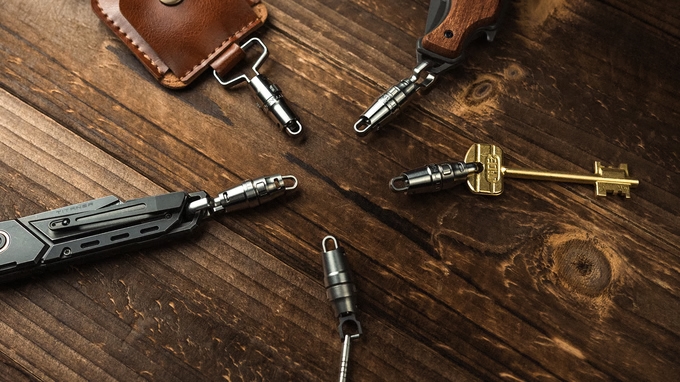
Simply put, Titaner is a completely reimagined connector system designed to replace traditional keyrings — the same twisted metal rings many of us have been using since college.
No more awkward spiral keyrings.
No more constant jangling in your khaki pockets.
And most importantly, no more wondering “Is this thing going to pop open?” every time you grab your keys.
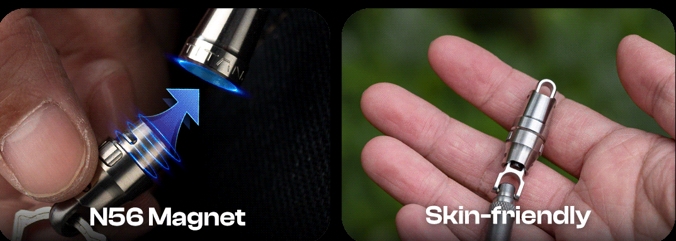
By design, Titaner uses GR5 titanium — ultra-light yet extremely strong — combined with a dual-lock system (magnetic + mechanical) inspired by high-end mechanical products I’ve worked with while building my own tools.
The operation is simple but clever:
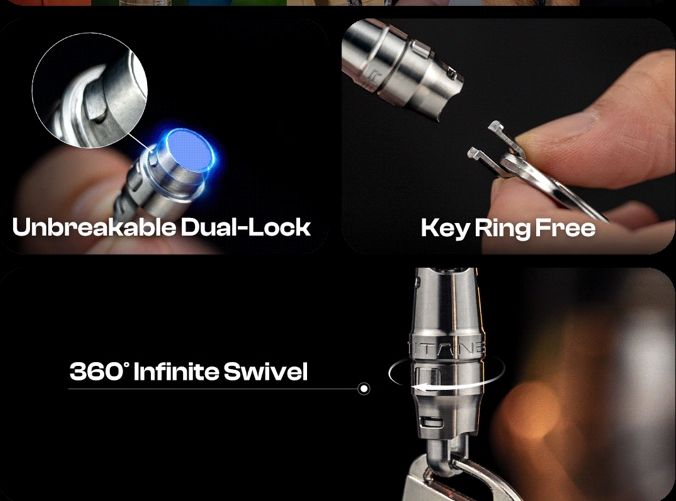
• Press and rotate 90° to open
• Once locked, pulling force, vibration, or impact won’t separate the two halves unintentionally
It’s essentially replacing a traditional metal ring with a smart mechanical joint — something I never expected to see in such a basic item as a keychain.
When I asked myself: “What is my keychain actually like?”
I didn’t use a traditional keyring for a few years — I used it for many years.
It did its job well enough: holding keys together, staying closed, and providing that familiar jangling soundtrack I’d come to accept.
But while browsing EDC forums, I kept seeing comments like:
- Some people said they used Orbitkey, but the screws eventually loosened in their pockets, causing keys to fall out
• Others switched from traditional keybars to Orbitkey, only to switch back because the small screws constantly needed tightening
• On r/EDC, a few users bluntly stated they didn’t fully trust Orbitkey to keep keys secure if the clamping mechanism wasn’t tight enough
Those stories pushed me to look more seriously at the key organizer market — and Titaner showed up right when I was growing tired of cheap, unreliable rings.
Technical details I could actually feel in daily use
These are the aspects that stood out once Titaner became part of my EDC setup:
Design & construction
- Material: GR5 titanium — lightweight, rigid, and resistant to discoloration over time
• Dual-lock system: magnetic alignment + load-bearing mechanical lock
• One-handed operation: press + 90° twist — quick to learn, no uneasy “will this slip?” feeling
• 360° swivel: prevents keys and cables from twisting
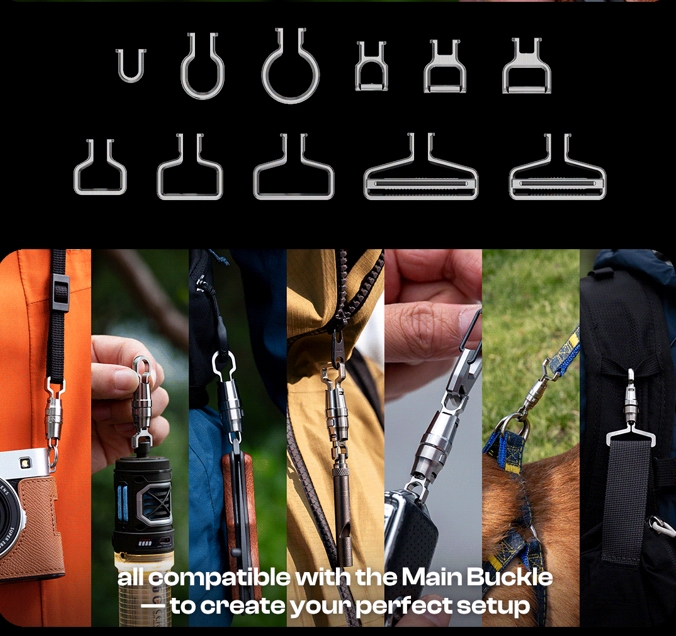
• Modular sub-buckles: adaptable to different EDC styles
In the first few days, the solid “click” felt far more reassuring than wrestling with a screwdriver and traditional keyrings — something that used to frustrate me whenever I reorganized my keys.
Titaner vs. Orbitkey — a practical comparison
Here’s a straightforward comparison between two popular EDC key-carry solutions, from a serious user’s perspective:
| Criteria | Titaner EDC Connector | Orbitkey Key Organizer |
| Connection security | Very high (magnetic + mechanical dual-lock) | Good, but depends on screws & bar tension |
| Tangle resistance | Nearly none (360° swivel) | Varies by model/setup |
| Carry weight | Extremely light (titanium) | Light, but usually bulkier |
| Modularity | Highly modular with sub-buckles | Limited customization |
| Repair / upgrades | Modular, easy to replace parts | Dependent on screw kits |
| Brand recognition | Emerging | Well-established |
| Public reviews | Still limited due to newness | ~4.1 ⭐ on Trustpilot |
| Common user pain points | Too new for widespread failure data | Loose screws, slow support reported by some users |
This made it clear to me that Titaner prioritizes mechanical performance and security, while Orbitkey focuses on minimalist styling and brand familiarity. Each has its strengths.
The engineering mindset behind Titaner
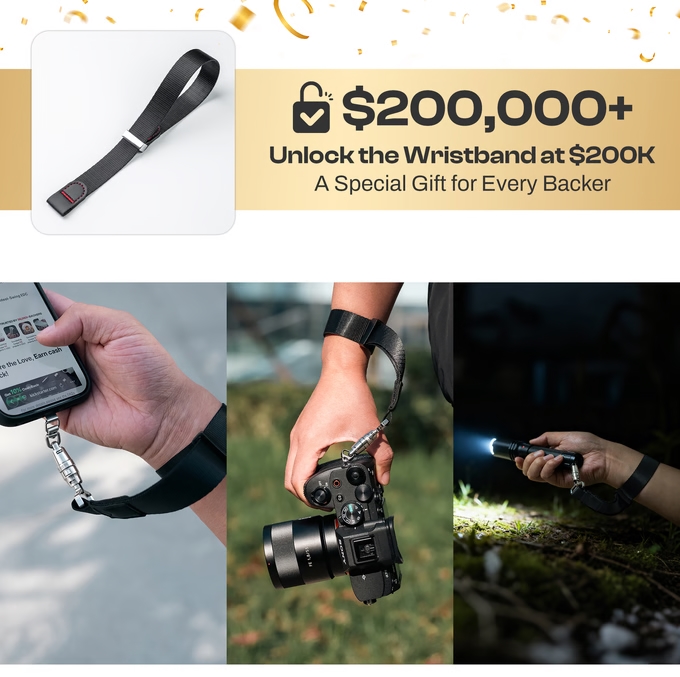
What truly impressed me about Titaner goes beyond the tactile feel or premium materials — it’s the way the product is clearly shaped by an engineering-first mindset. The design philosophy feels closer to what you’d expect from ergonomic tools or professional-grade equipment, where every detail exists to solve a real, recurring problem rather than to look good on a spec sheet.
Instead of treating a key connector as a simple accessory, Titaner fundamentally rethinks the idea of “connection” itself. It breaks the problem down into functional layers and then rebuilds it with intention. Magnetic alignment handles the first moment of interaction, guiding parts into place instantly without forcing you to look or fumble for the correct orientation. Mechanical locking then takes over, providing a level of security that inspires confidence — once it’s locked, nothing separates by accident, no matter how much movement or daily abuse it goes through.
On top of that, the 360-degree swivel addresses an annoyance many EDC users simply tolerate: twisting, tangled keys and tools, especially when carrying loose gear in a backpack or messenger bag. Finally, the modular sub-buckle system moves away from the outdated idea that everything must live on a single metal ring. Instead, you choose the right connector for each item and each use case, creating an EDC setup that’s not just organized, but purpose-built for how you actually move through your day.
What the EDC community actually says
From r/EDC and other forums:
- Many users say Orbitkey reduces jangling and cleans up pockets, but requires frequent screw tightening
• Some report screws loosening to the point where keys spill out
• Titaner is still relatively new, so fewer firsthand stories exist — but gear reviewers consistently highlight the dual-lock design as a meaningful step forward in reliability
Personally, I appreciate that Titaner solves problems many EDC users have already experienced: no screw adjustments, no twisting, no unnecessary noise.
Who is Titaner for?
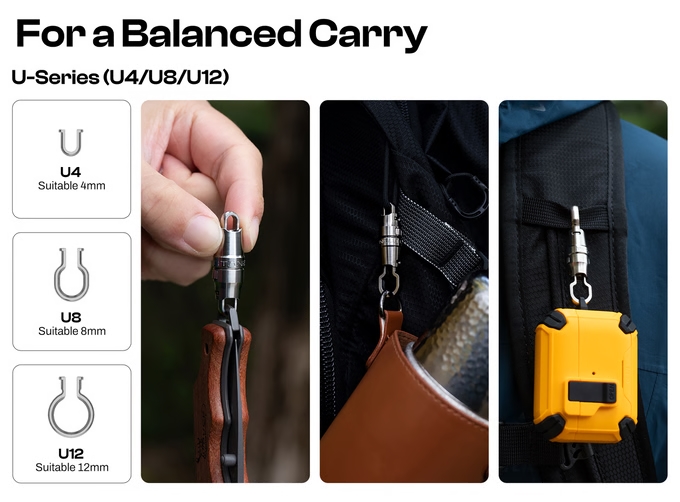
Titaner makes sense if you’re someone who:
- Cares about optimizing workflow and daily experience
• Carries multiple small items: keys, AirTag, USB drives, mini tools
• Hates bulky, awkward pockets
• Has been frustrated by traditional key organizers
Titaner feels more like engineering than a keyring. It’s similar to upgrading from a standard mouse to a premium wireless one — subtle at first, but unmistakable after a few days.
Where to buy Titaner in the U.S.
Kickstarter (current)
Titaner is currently running a Kickstarter campaign ahead of wider retail availability. This is usually where you’ll find early-bird pricing and bundle options.
Search for “Titaner EDC Connector Kickstarter” to view current tiers and availability.
Final thoughts (personal take)
I don’t see Titaner as a flashy accessory. It’s a daily-use tool, and the reduced friction it brings is exactly what engineers, designers, and freelancers tend to value.
It’s not just a keychain — it’s a reliable connection point between you and the tools you carry every day.
Once you get used to it, traditional keyrings start to feel outdated very quickly.